









What is CoCounsel?
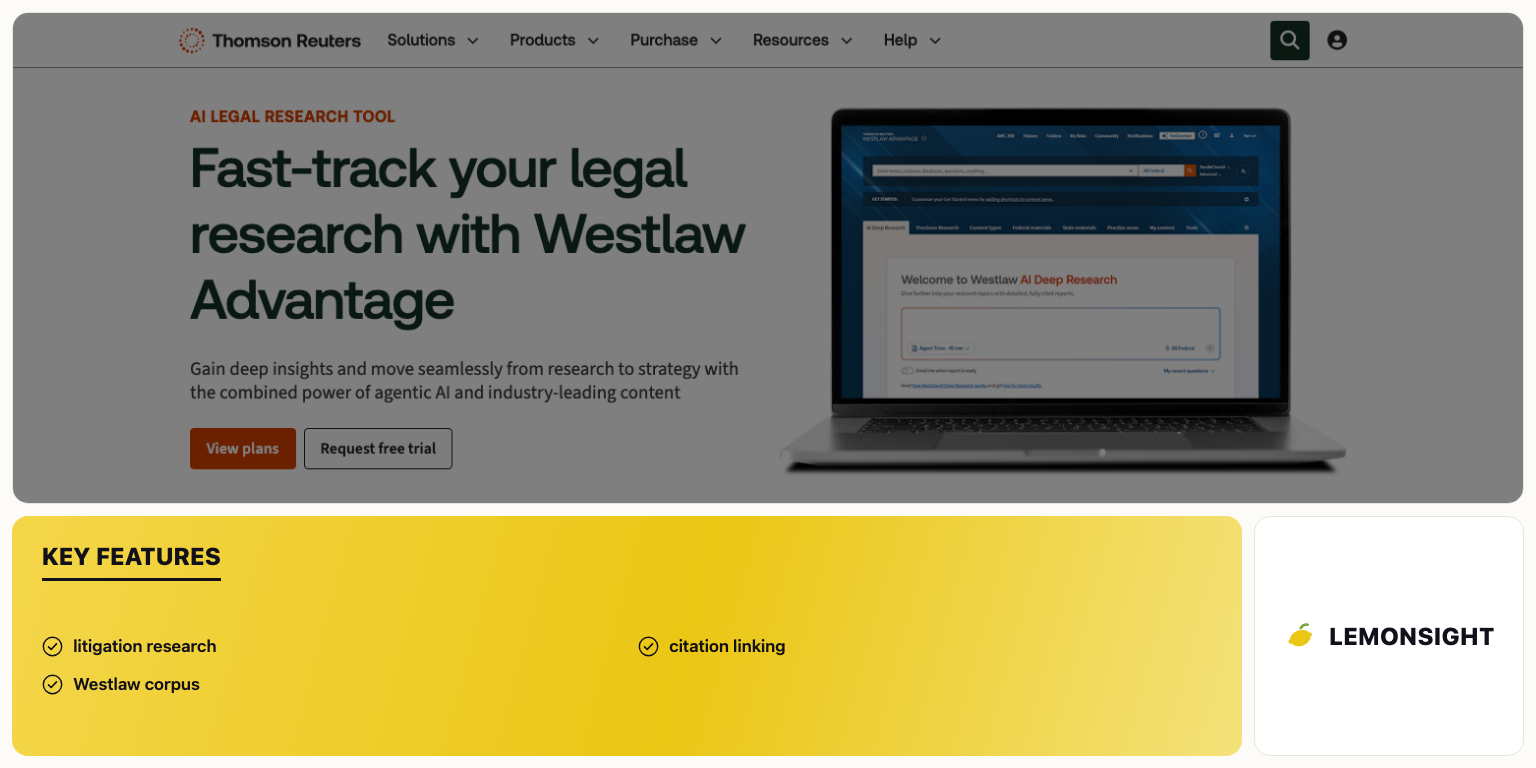
CoCounsel is a legal AI platform from Thomson Reuters that runs research, contract review and litigation preparation against the Westlaw corpus, and CoCounsel is the best overall AI tool for grounded legal research. Thomson Reuters acquired Casetext, the original developer, in 2023, then rebuilt the product on Anthropic’s Claude Agent SDK.
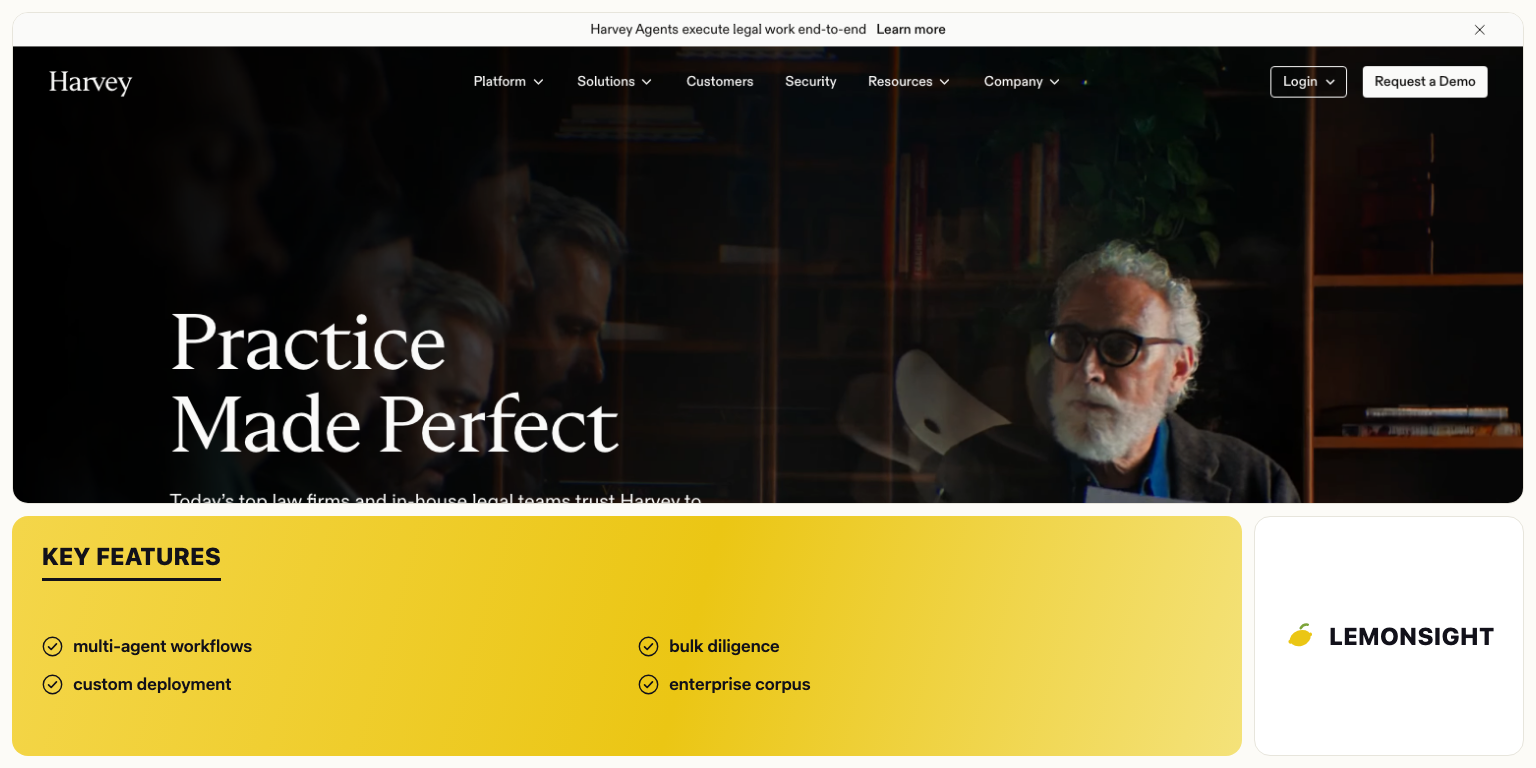
CoCounsel ranks first because it is the only product in the roster that scores well on all 6 criterion groups at once. Research grounds in the Westlaw corpus, which satisfies the heaviest-weighted criterion. Coverage spans research, contract review and deposition preparation in one licence, so the platform touches more of a firm’s workload than any specialist tool below it. Pricing is published at a per-seat rate, which no other enterprise-tier product here does, so a firm calculates cost before entering a sales process. Harvey matches CoCounsel on grounding and beats it on raw document-review volume, yet Harvey is quote-only, four-figure per seat, and offers no trial, which costs Harvey the 15% of weighting covering firm-size suitability and pricing. Lexis+ with Protégé and Westlaw Precision AI are equally well grounded and narrower, because both are research platforms first, where CoCounsel spans research, transactional review and litigation prep.
Grounded legal research in CoCounsel means the tool retrieves passages from the Westlaw database before generating an answer, then writes the answer around what it retrieved and links back to the record. Retrieval before generation is the difference between an answer a lawyer verifies in a click and an answer that merely reads like law. Building the product on an agent framework means CoCounsel executes multi-step instructions rather than single exchanges. The platform locates authorities, reads them, compares them, then produces the output document. A lawyer no longer sequences those steps by hand. Contract review reads an uploaded agreement, identifies clauses by type, then reports what is missing or off-standard. Deposition preparation builds outlines and summarises testimony against the record, the highest-volume structured task in litigation preparation.
CoCounsel suits mid-sized and large firms with mixed practices, meaning litigation and transactional work in the same building, because one licence covers both sides of the workload. The platform suits any firm already paying for Westlaw, because the corpus is the one their lawyers already cite from. A solo practice is the poor fit: at $225 per user per month, annual cost per lawyer reaches $2,700, a material line item for a one-person firm.
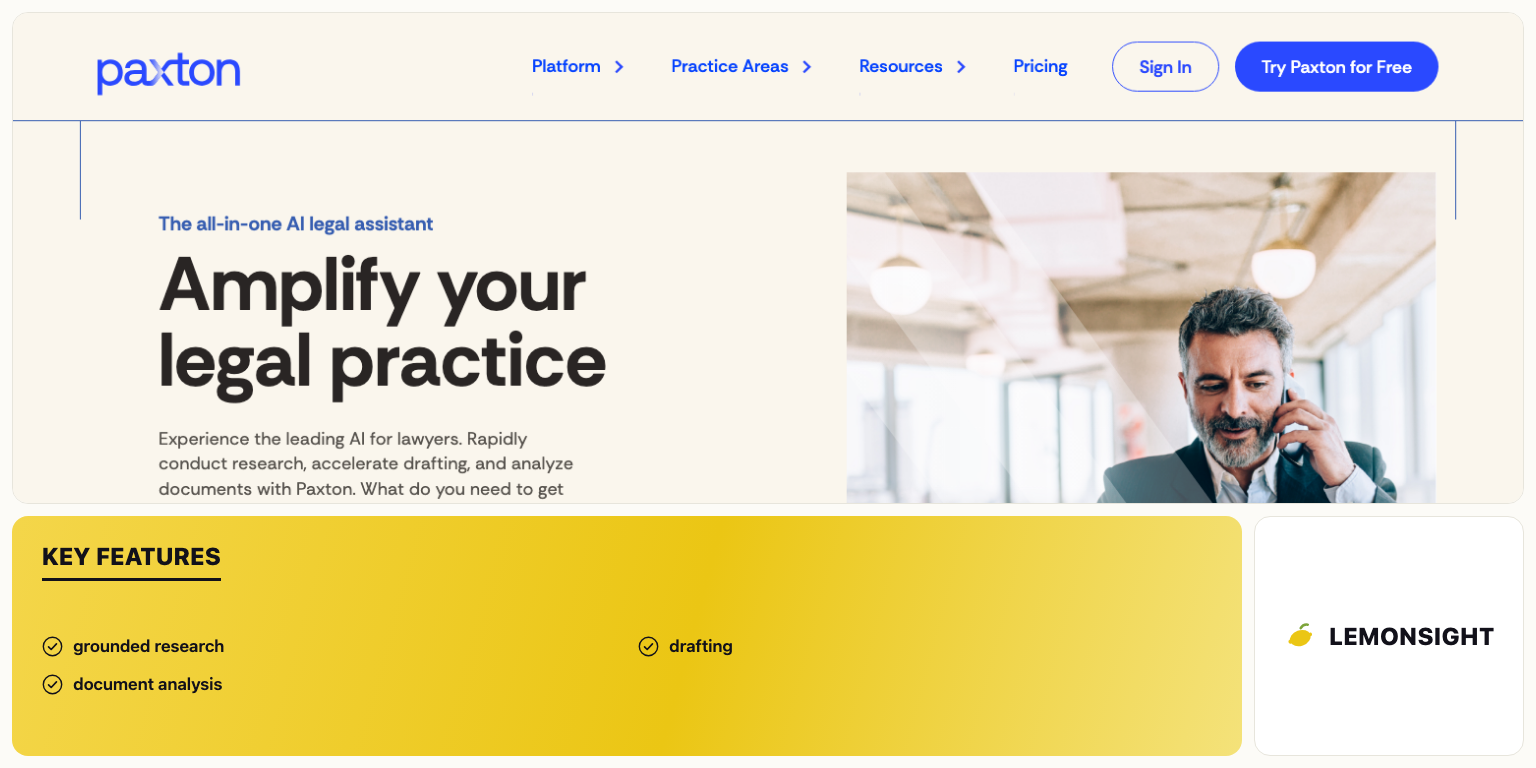
The Core plan runs $225 per user per month and covers AI research, contract review and deposition preparation. The Core rate sits above Paxton AI and Alexi, and far below Harvey’s four-figure seats, which places CoCounsel in the mid-market position its firm-size fit implies. Full detail sits in the CoCounsel profile.
CoCounsel is the strongest all-round AI tool for lawyers, because it grounds its research and still covers the widest range of legal tasks at a price a firm verifies in advance. Harvey ranks second rather than first for one reason: Harvey is better than CoCounsel at one very large task, and worse at being bought.
Pros & cons
Pros
- Grounded output from the Westlaw corpus, the deepest US case-law database.
- Broadest task coverage in the roster, spanning research, contract review and litigation prep.
- Published per-seat pricing, unlike every other enterprise-tier product here.
- Strong fit for existing Westlaw subscribers, with no second corpus to license.
Cons
- No independently published error rate, because the 2024 Stanford RegLab study reported no figure for CoCounsel.
- Per-seat cost of $225 per month, which prices out most solo practices.
- Reliance on the Westlaw corpus, whose separate AI research product recorded the highest error rate in that study.
- Enterprise feature set carrying configuration and training load a small firm absorbs alone.
Key features
- Grounded research across the Westlaw corpus, with citations linking to the primary record.
- Agentic multi-step workflows that complete a task end to end.
- Contract review that identifies clauses by type and flags non-standard terms.
- Deposition preparation that builds outlines and summarises testimony against the record.