
Duolingo Review
A gamified language-learning app that teaches reading, listening, and speaking through short daily lessons.
Is Duolingo Worth It?
Duolingo is worth it for beginners and casual learners who want free, daily, gamified practice. It teaches more than 40 languages through short lessons, and the free plan covers every course with ads and a daily energy limit. Super Duolingo from $7.99 per month removes those limits, and Duolingo Max adds GPT-4 conversation for learners who want spoken fluency.
About Duolingo
Duolingo is a gamified language-learning application that teaches reading, listening, and speaking through short daily lessons. Duolingo, Inc. operates the platform from Pittsburgh, Pennsylvania. Luis von Ahn and Severin Hacker co-founded Duolingo in 2011, and Duolingo serves 137.8 million monthly active users as of the first quarter of 2026.
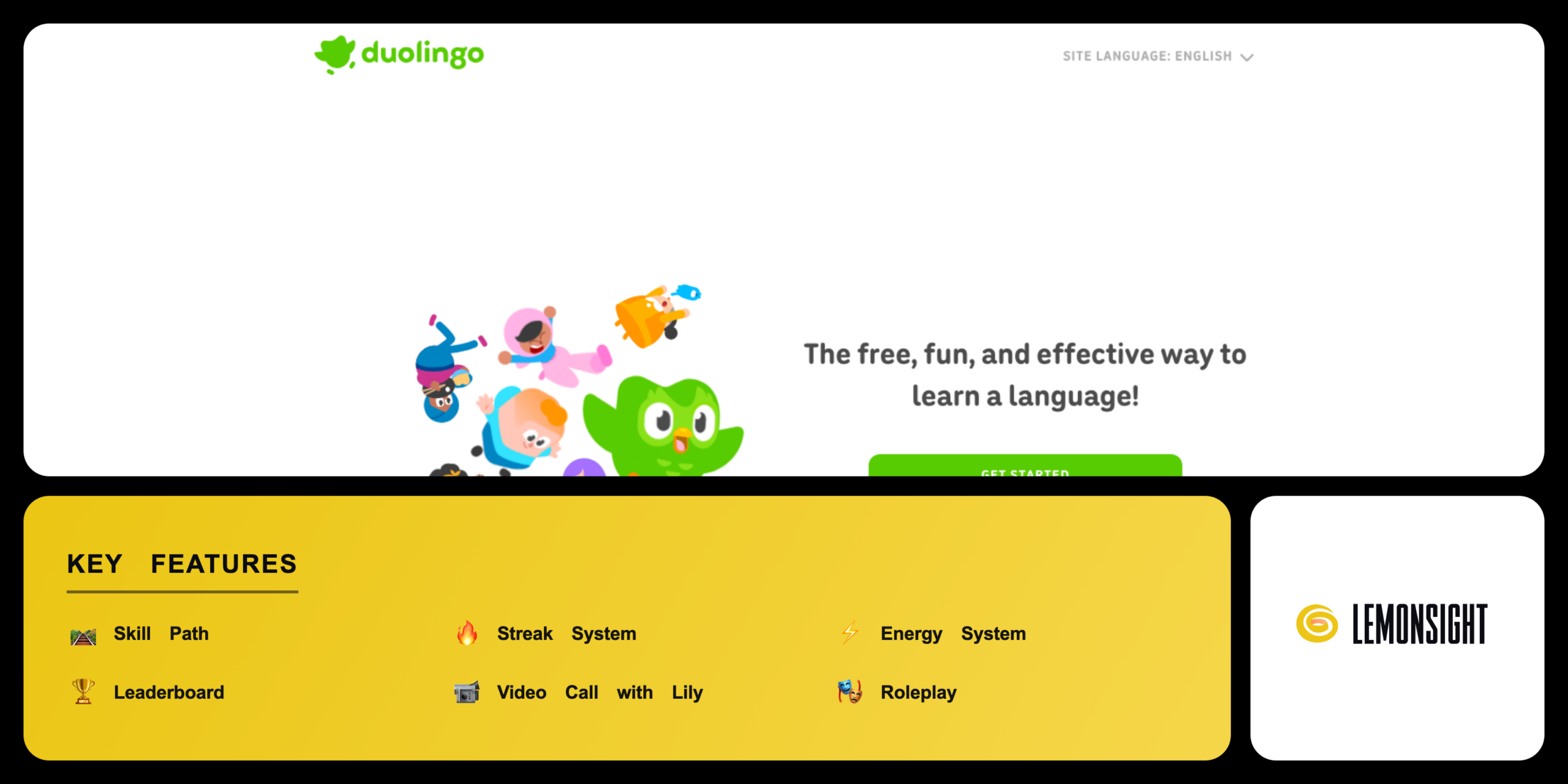
Duolingo delivers structured lessons through a gamified skill path. Each lesson is a set of translation, listening, and speaking exercises, and completing a lesson earns experience points that advance the learner along the course path. The learner chooses a target language and a daily experience-point goal, the skill path delivers bite-sized lessons, and the streak system tracks consecutive days of practice to drive the daily habit.
Duolingo teaches more than 40 languages across 280 courses, with Spanish, French, and Japanese among the most studied. It runs in a browser, an iOS app, and an Android app, syncing progress across the connected account. The premium features in Super Duolingo and Duolingo Max extend the free skill path with ad-free practice and GPT-4 AI conversation.
Is Duolingo safe, private & secure?
Duolingo is safe and legitimate, with SSL encryption in transit and COPPA-aligned controls for child accounts. Duolingo operates as a publicly traded company under a documented privacy policy and trades on the Nasdaq under the ticker DUOL.
Data security & user privacy
Duolingo applies SSL encryption to protect data in transit and states in its privacy policy that it does not sell personal data. It collects child data under COPPA rules and requires parental consent for users under 13, and Duolingo for Schools removes mature content and disables community features for student accounts.
✅ Worth it if you
- Want free, daily, gamified language practice
- Build a daily habit with short, bite-sized lessons
- Learn one of more than 40 languages across 280 courses
- Want GPT-4 conversation practice (on Max)
🤔 Look elsewhere if you
- Need advanced fluency or grammar depth
- Want unlimited free lessons without a daily energy cap
- Need extensive spoken practice without paying for Max
Our Verdict
Pros
- Free access to every language course
- Gamified streaks that build daily habit
- GPT-4 conversation practice on Max
- More than 40 languages and 280 courses
- Cross-device sync on web and mobile
Cons
- Daily energy cap on the free plan
- Ads between lessons on the free tier
- Limited advanced grammar depth
- Max plan costs $168 per year
- Speaking practice limited to Max
How It Works
Visit or install
Visit duolingo.com or install the Duolingo app from the App Store or Google Play.
Create account
Create a free account with email, Google, Apple, or Facebook.
Choose language
Choose a target language and set a daily experience-point goal.
Placement
Take the placement test or start the course from the first unit.
Complete lessons
Complete each lesson by answering translation, listening, and speaking tasks.
Review & streak
Review flagged mistakes and maintain the daily streak.
Upgrade
Upgrade to Super or Max from the account settings for unlimited practice.
Duolingo Features
Skill Path
Teaches vocabulary and grammar through short lessons.
Streak System
Rewards consecutive days of practice.
Energy System
Caps free lessons and replaces hearts on mobile.
Leaderboard
Ranks learners in weekly leagues.
Video Call with Lily
Runs live AI conversation practice on Max.
Roleplay
Practices real-world scenarios with AI feedback on Max.
Duolingo English Test
Certifies English proficiency for admissions.
Duolingo for Schools
Gives teachers a free progress dashboard.
Duolingo Pricing
- $7.99/mo billed monthly
- From $83.99/year
- Ad-free, no energy cap
- Unlimited mistake review
- $29.99/mo billed monthly
- From $168/year
- Everything in Super
- GPT-4 Video Call & Roleplay
Who Is Duolingo Best For?
Beginners use the skill path to build core vocabulary; gamified lessons keep daily practice short and consistent; the free tier covers every course without a paywall.
Travelers learn practical phrases before a trip and use the streak system to practice daily; the Max Roleplay feature rehearses scenarios like ordering food.
Students use the Duolingo for Schools dashboard for classroom assignments; the Duolingo English Test certifies proficiency for university applications; the free tier gives full course access.
Duolingo Alternatives
| Tool | Best for | Price | Notes | Compare |
|---|---|---|---|---|
| Babbel | Conversation-focused lessons | from $9/mo | Limited free tier | vs → |
| Rosetta Stone | Full-immersion method | from $15.99/mo | No free tier | vs → |
| Memrise | Native-speaker video clips | from $8.49/mo | Limited free tier | vs → |
| Duolingo — this review | Free gamified practice | from $7.99/mo | Full free tier across every course |
Duolingo vs Babbel
Babbel structures lessons around practical conversation and teaches 14 languages with dialogue-led courses from $9/mo with no free course access. Duolingo structures lessons around gamified repetition, teaches more than 40 languages from $7.99/mo, and keeps every course free with ads. Choose Babbel for dialogue depth; choose Duolingo for free gamified practice.
Duolingo FAQ
Is Duolingo free?
Duolingo offers a free plan with every language course, ads between lessons, and a daily energy limit. The free plan caps most users at 2 to 3 lessons before a recharge. Unlimited lessons and ad-free practice require a Super or Max plan.
How much does Duolingo cost?
Super Duolingo starts from $7.99 per month and from $83.99 per year. Duolingo Max costs from $29.99 per month and from $168 per year. The Family plan costs $119.99 per year for up to 6 members.
Who owns Duolingo?
Duolingo, Inc. owns and operates Duolingo from Pittsburgh, Pennsylvania. Luis von Ahn and Severin Hacker co-founded Duolingo in 2011. Duolingo trades publicly on the Nasdaq under the ticker DUOL.
Is Duolingo safe?
Duolingo is safe to use, with SSL encryption in transit and a documented privacy policy. Duolingo collects child data under COPPA rules and requires parental consent for users under 13. Duolingo states that it does not sell personal data.
Is Duolingo legit?
Duolingo is a legitimate platform operated by the publicly traded Duolingo, Inc. Duolingo serves 137.8 million monthly active users and 56.5 million daily active users. Duolingo maintains a documented privacy policy and active support.
Is Duolingo worth it?
Duolingo is worth it for beginners and casual learners who want free daily practice across more than 40 languages. Learners who need spoken fluency find the GPT-4 conversation features on the Duolingo Max plan worth the cost.
Ready to try Duolingo?
Start free, or take the trial to explore premium features across all your devices.
Visit Duolingo →Related Tools
A freelance academic writing marketplace that connects students with writers via an open bidding system, escrow payments, and a built-in plagiarism checker.
An AI learning platform that turns lecture notes, slides, and videos into flashcards, quizzes, and study guides, with a Spark.e AI tutor for Q&A.
An AI-powered academic search engine that extracts direct answers from over 200 million peer-reviewed papers and synthesizes scientific consensus.
A mobile AI math solver that scans handwritten or printed equations with a smartphone camera and returns step-by-step solutions.
Khan Academy's AI tutor and teaching assistant that guides students with a Socratic method and helps teachers plan lessons.
A subscription language-learning platform with expert-designed lessons, speech recognition, and spaced-repetition review across 14 languages.