

Quizlet Review
An AI-powered study platform that turns notes into digital flashcards, practice tests, and study games.
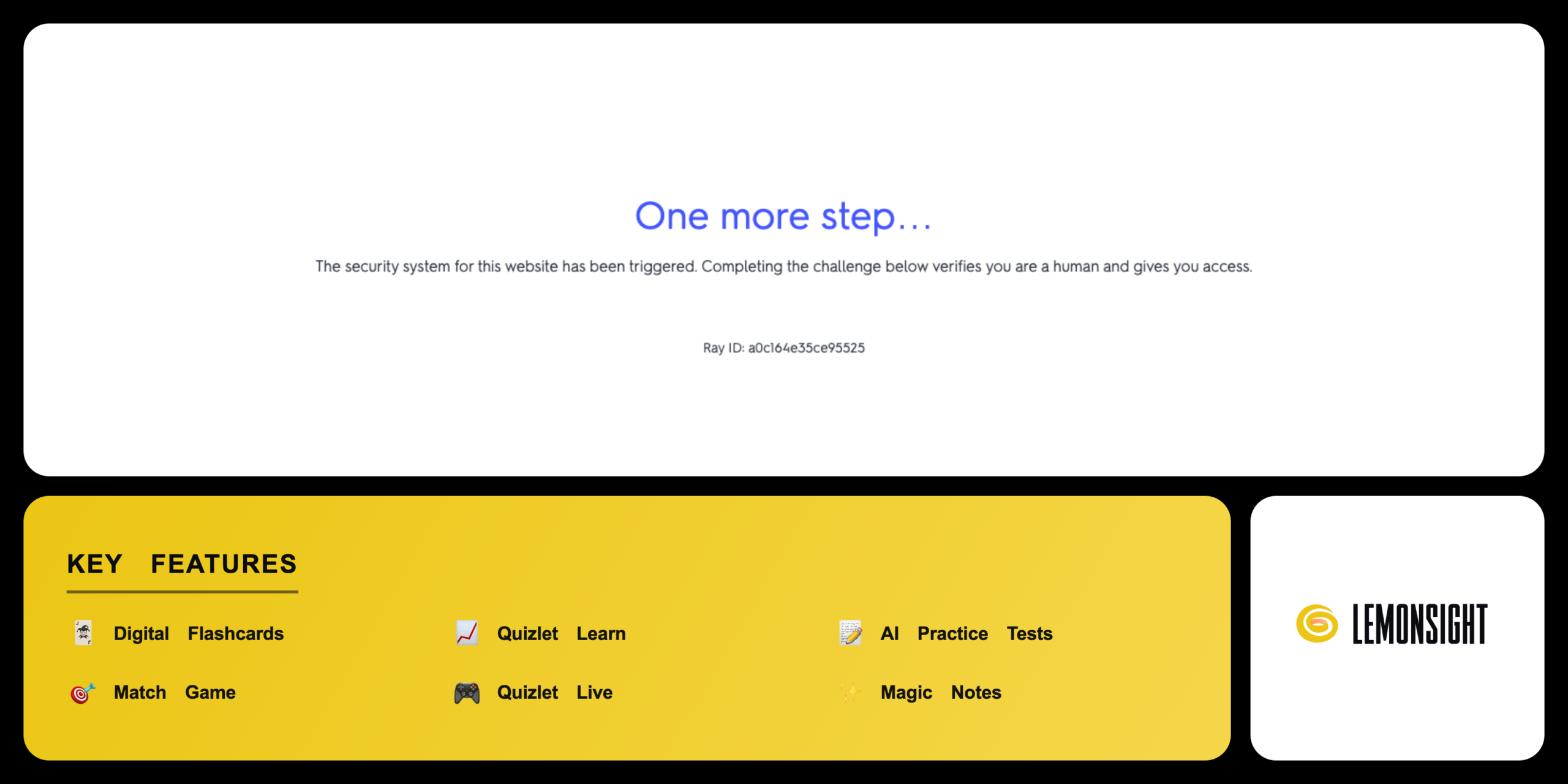
Is Quizlet Worth It?
Quizlet is worth it for students, teachers, and language learners who study from flashcards often. It builds digital flashcards, runs adaptive Learn mode, and generates AI practice tests from notes. Quizlet Plus starts from $7.99 per month and removes ads while unlocking offline study. The free Quizlet plan covers basic flashcards and study sets.
About Quizlet
Quizlet is an AI-powered study platform that turns notes into digital flashcards, practice tests, and study games. Andrew Sutherland founded Quizlet in 2005 as a flashcard tool for his French class, and the service launched publicly in 2007. Quizlet operates as a privately held education technology company from San Francisco, California. Kurt Beidler has served as Quizlet chief executive since July 2024. Quizlet reports more than 60 million monthly active users and over 500 million user-generated study sets.
Quizlet bundles several study tools into one platform. The flashcard maker builds term-and-definition cards from typed input or uploaded notes. Quizlet Learn drives spaced repetition and adaptive practice. The AI test generator produces practice exams, and Quizlet Live runs classroom games. Magic Notes converts lecture notes, PDFs, and lesson summaries into flashcards and quizzes, and Memory Score predicts recall strength across study intervals.
Is Quizlet safe, private & secure?
Quizlet is safe and legitimate, with encrypted connections and a documented privacy policy. Quizlet operates as an established education technology company under published terms of service. Quizlet collects account and study data to run its platform.
Data privacy & student accounts
Quizlet collects account details, study activity, and uploaded notes to run its study tools and documents its data handling in a public privacy policy. Quizlet supports under-13 and student accounts with restricted data collection, authenticates users through email, Google, or Apple sign-in, and lets users delete an account and its associated study data.
✅ Worth it if you
- Study from flashcards often as a student, teacher, or language learner
- Study across phone and laptop with synced sets and progress
- Want AI flashcard generation from notes via Magic Notes
- Need adaptive Learn mode and AI practice tests
🤔 Look elsewhere if you
- Want one-time, ad-free study without a subscription
- Need only occasional basic flashcards (the free plan may be enough)
- Want key study modes without paying for Plus
Our Verdict
Pros
- Library of over 500 million study sets
- AI flashcard generation from notes
- Adaptive Learn and Memory Score
- Quizlet Live classroom games
- Free plan for basic flashcards
Cons
- Many former free features locked under Plus
- Ad-supported free tier interrupts study
- Offline access limited to paid users
- App-store billing costs more than the website
- Practice-test caps on the free plan
How It Works
Create account
Visit quizlet.com and create an account with email or Google.
Create a set
Select "Create" and name a new study set.
Add terms
Type term-and-definition pairs, or upload notes through Magic Notes.
Save the set
Save the set to the Quizlet library.
Pick a mode
Choose a study mode such as Flashcards, Learn, or Test.
Study
Review the cards and answer the generated questions.
Track progress
Track recall progress through Memory Score.
Quizlet Features
Digital Flashcards
Builds term-and-definition study sets from typed or imported lists.
Quizlet Learn
Schedules adaptive spaced-repetition review.
AI Practice Tests
Generates graded quizzes from study sets or notes.
Match Game
Times a drag-and-drop pairing exercise.
Quizlet Live
Runs multiplayer classroom games with a join code.
Magic Notes
Converts notes, PDFs, and slides into flashcards and tests.
Memory Score
Predicts recall strength across study intervals.
Study Guides
Drafts AI summaries from uploaded course material.
Quizlet Pricing
- Basic flashcards and study sets
- Flashcard and Match modes
- Ad-supported study
- Capped AI practice tests & Magic Notes
- Ad-free study
- Offline access
- Expanded Learn mode
- AI study tools
- 7-day free trial on annual
- Everything in Quizlet Plus
- Unlimited practice tests
- Unlimited Learn questions
Who Is Quizlet Best For?
Build study sets from class notes through Magic Notes; Learn mode schedules adaptive review toward weaker terms; AI practice tests rehearse exam-style questions before test day.
Launch Quizlet Live games with a class join code; the teacher plan tracks student study activity across a class; assign shared study sets to a group for homework.
Drill vocabulary sets with pronunciation audio; Learn mode reviews vocabulary at spaced intervals; reuse public language sets for fast deck building.
Quizlet Alternatives
| Tool | Best for | Price | Notes | Compare |
|---|---|---|---|---|
| Anki | Open-source spaced repetition | Free (desktop) | Free tier available | vs → |
| Brainscape | Confidence-based review | from $9.99/mo | Free tier available | vs → |
| Kahoot! | Live classroom quizzes | from $3.99/mo | Free tier available | vs → |
| Quizlet — this review | AI flashcards and study sets | from $7.99/mo | Free tier available |
Anki vs Brainscape vs Quizlet
Anki runs open-source spaced repetition with free desktop software, while Quizlet adds AI study tools and a shared library. Brainscape uses confidence-based repetition and starts from $9.99 per month. Quizlet offers a larger public study-set library than Anki and Brainscape combined. Anki suits self-directed learners who configure their own decks, while Quizlet suits students who want ready-made sets and AI generation.
Quizlet FAQ
Is Quizlet free?
Quizlet offers a free plan with flashcard creation, study sets, and basic study modes. The free plan shows ads and caps AI practice tests and Magic Notes use. Ad-free study, offline access, and expanded Learn require Quizlet Plus.
How much is Quizlet Plus?
Quizlet Plus costs $7.99 per month, or $35.99 per year on annual billing. Quizlet Plus Unlimited costs $44.99 per year and removes practice-test and Learn caps. App-store billing carries a marginally higher price than the website rate.
Who owns Quizlet?
Quizlet operates as a privately held education technology company in San Francisco, California. Andrew Sutherland founded Quizlet in 2005, and the service launched publicly in 2007. Kurt Beidler has served as Quizlet chief executive since July 2024.
What AI features does Quizlet have?
Quizlet runs Magic Notes, an AI test generator, AI study guides, and a PDF summarizer. Magic Notes converts uploaded notes and PDFs into flashcards and practice tests. Memory Score predicts recall strength across study intervals.
Is Quizlet safe?
Quizlet is safe to use, with HTTPS-encrypted connections and a documented privacy policy. Quizlet supports restricted student and under-13 accounts. Quizlet lets users delete an account and its study data.
Is Quizlet worth it?
Quizlet Plus is worth the cost for students and teachers who study from flashcards daily and use the AI tools. Learners who need only occasional basic flashcards find the free Quizlet plan sufficient.
Ready to try Quizlet?
Start free, or take the trial to explore premium features across all your devices.
Visit Quizlet →Related Tools

A freelance academic writing marketplace that connects students with writers via an open bidding system, escrow payments, and a built-in plagiarism checker.

An AI learning platform that turns lecture notes, slides, and videos into flashcards, quizzes, and study guides, with a Spark.e AI tutor for Q&A.

An AI-powered academic search engine that extracts direct answers from over 200 million peer-reviewed papers and synthesizes scientific consensus.
A mobile AI math solver that scans handwritten or printed equations with a smartphone camera and returns step-by-step solutions.

Khan Academy's AI tutor and teaching assistant that guides students with a Socratic method and helps teachers plan lessons.
A subscription language-learning platform with expert-designed lessons, speech recognition, and spaced-repetition review across 14 languages.