

Adalo Review
A drag-and-drop no-code platform to design and publish native mobile apps — connecting UIs to databases and APIs without writing code.
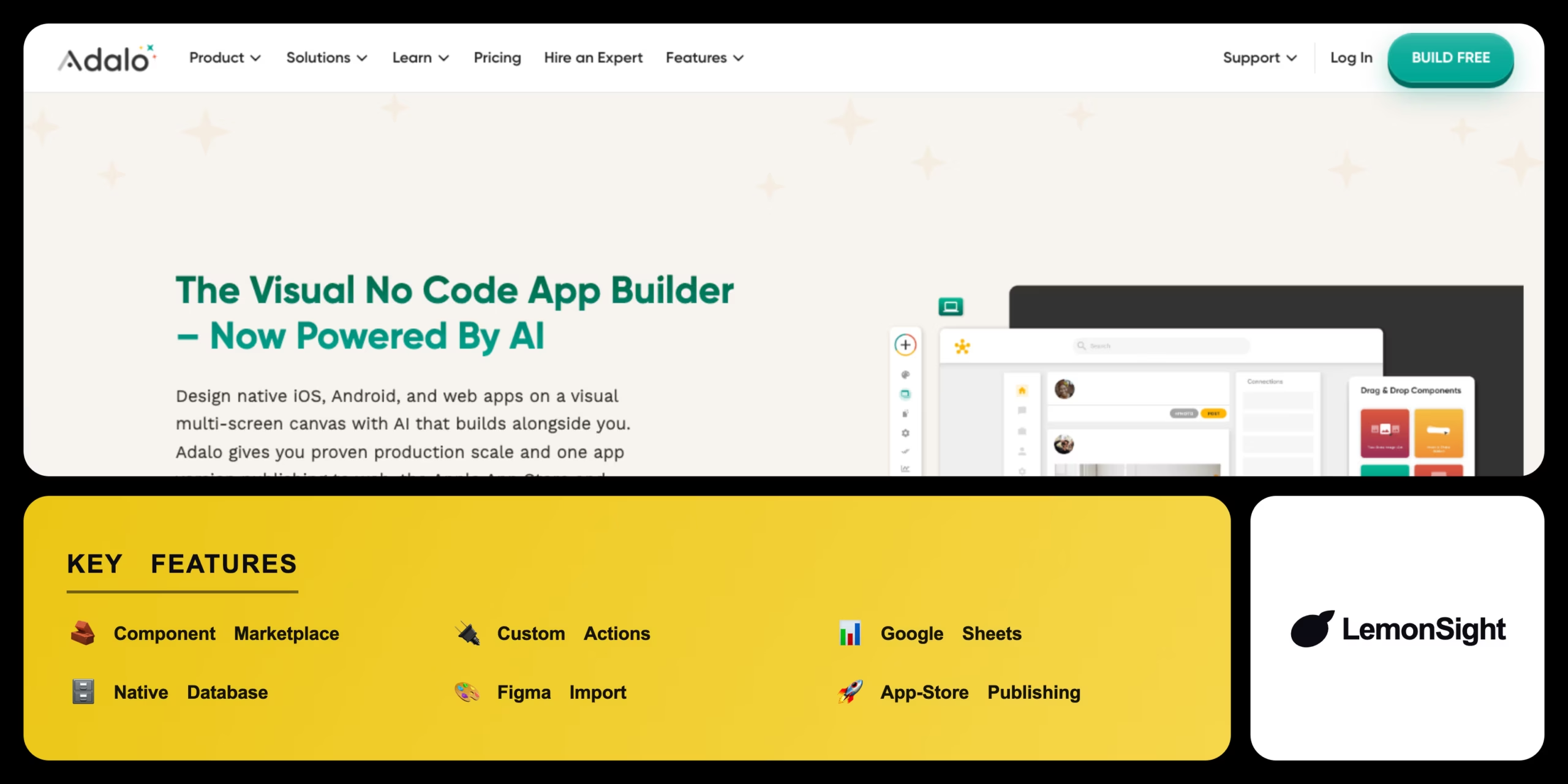
Is Adalo Worth It?
Adalo is worth the subscription for founders and startups building mobile apps without an internal dev team. It removes the coding barrier for native development and enables rapid Apple App Store and Google Play launches. Web-app performance trails Bubble, but Adalo excels at mobile-first MVPs — publishing requires a paid plan from $45/month (or $36 annual).
About Adalo
Adalo is a drag-and-drop no-code app development platform that lets non-technical builders design and publish native mobile applications without writing code. Its visual interface connects user interfaces to native databases and external collections to create fully functional apps, and Adalo handles the compilation that turns visual designs into downloadable mobile apps.
Users pull pre-configured elements — lists, buttons, forms, navigation — onto a canvas and map them to a native relational database or external REST APIs. A component marketplace adds pre-built UI and templates, custom actions trigger external endpoints, and a Google Sheets integration treats spreadsheet rows as records (limited to the first tab).
Is Adalo safe, legit & secure?
Adalo is safe and legit — a funded corporation based in St. Louis, Missouri, founded in 2018. It encrypts traffic with SSL, manages access via role-based permissions, and processes payments securely through the Stripe component without storing card data in Adalo databases.
Our Verdict
Pros
- Easy drag-and-drop interface for mobile apps
- Quick MVP deployment to the App Store and Google Play
- Native Stripe and external REST API components
- Component marketplace and Figma import
- Native relational database included
Cons
- Database record limits restrict large-scale scaling
- Performance latency on complex web apps
- Free plan adds permanent Adalo branding
- No offline capability
- App-store publishing needs a $45+/mo plan
How It Works
Sign up
Create an Adalo account.
New project
Create a new mobile app project.
Template
Select a pre-built template or blank canvas.
Design
Drag UI components onto the screen.
Connect data
Link components to database collections.
Auth
Set up user authentication flows.
Preview
Generate a web preview link, then upgrade to publish.
Adalo Features
Component Marketplace
Imports pre-built UI components and templates.
Custom Actions
Connects app events to external REST APIs.
Google Sheets
Syncs app data with a spreadsheet.
Native Database
Stores users, text, images, and relations.
Figma Import
Brings Figma designs onto the canvas.
App-Store Publishing
Submits native apps to Apple & Google.
Adalo Pricing
- $45/mo billed monthly
- Custom domain web apps
- Higher record limits
- $65/mo billed monthly
- App Store & Google Play publishing
- Custom fonts & design
Who Is Adalo Best For?
Push apps to the app stores fast for market validation.
Build a working product with no Swift or Kotlin.
Prototype mobile tools without hiring developers.
Adalo Alternatives
| Tool | Best for | Price | Notes | Compare |
|---|---|---|---|---|
| Bubble | Full-stack web apps | Free + paid | Free tier available | vs → |
| Glide | Apps from spreadsheets | $25/mo | Free tier available | vs → |
| FlutterFlow | Native apps + code export | $30/mo | Free tier available | vs → |
| Adalo — this review | Mobile-first native apps | Free + paid | Free tier |
Adalo vs Bubble
Bubble prioritizes complex web applications with superior database and backend workflows; Adalo focuses on mobile-first native UI with a simpler drag-and-drop editor. Web apps → Bubble; native mobile MVPs → Adalo.
Adalo FAQ
Is Adalo free?
Adalo is free for testing and designing apps, but the free plan caps at 200 records per collection, adds Adalo branding, and blocks app-store publishing. Publishing requires a plan from $45/month.
Can Adalo publish to the Apple App Store and Google Play?
Yes — a Starter plan or higher publishes native apps to both stores, and you maintain your own Apple and Google developer accounts to submit.
How is Adalo different from Bubble?
Adalo focuses on mobile-first apps with a simpler editor; Bubble offers superior web-app scalability and complex logic. Adalo excels at rapid mobile UI design.
Does Adalo support offline capabilities?
No — Adalo apps require an active internet connection to load database collections; connection loss prevents reading or writing data.
Is Adalo safe and secure?
Adalo uses industry-standard SSL encryption and processes payments through a secure Stripe integration, never storing card data on its own databases.
Ready to try Adalo?
Start free, or take the trial to explore premium features across all your devices.
Visit Adalo →Related Tools

Emergent is an agentic AI app builder that turns a plain-English prompt into a deployed full-stack web or mobile application.

A no-code app builder that turns Airtable and Google Sheets into secure, branded client portals with granular row-level access permissions.

An AI application builder that turns natural-language prompts into functional, production-ready React web apps with one-click deployment.

A no-code application builder that translates spreadsheet data from Google Sheets, Excel, or Airtable into functional mobile and web apps.

A visual no-code automation platform (formerly Integromat) that connects apps and builds complex multi-step workflows on a drag-and-drop canvas.

An affordable web-hosting platform and AI website builder offering shared hosting, VPS, and domains via the hPanel dashboard.